

GPS apps look simple from the outside: a blue dot on a map. Under the surface they involve battery trade-offs, background permissions, map costs, privacy law and a lot of real-world messiness. This guide explains how GPS mobile app development works, what it costs, and what to decide before you hire a team.
What is a GPS mobile app?
A GPS app uses the phone's location to deliver value. The phone does not rely on GPS alone. It combines satellite signals, Wi-Fi networks, mobile towers and motion sensors to estimate where it is. Common examples include:
- Delivery and ride apps that show a courier moving on a map.
- Field-staff and attendance apps that confirm where an employee checked in.
- Fleet and asset tracking for vehicles and equipment.
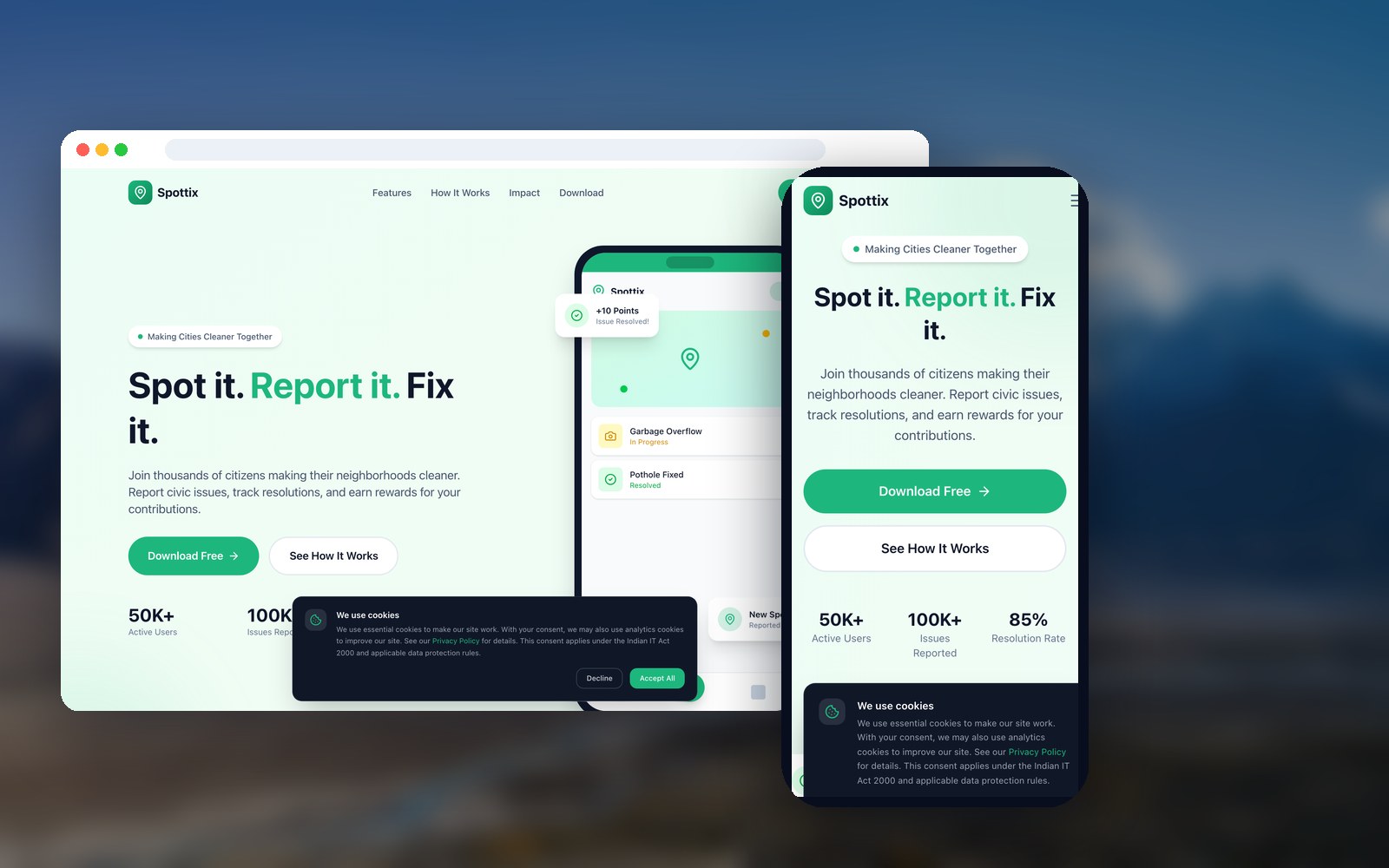
- Civic and reporting apps that tag a photo with its exact location. See our Spottix case study.
- Games and hunts that unlock content at real places.
- Location-aware marketing that triggers an offer near a store.
Core features of a GPS app
| Feature | What it involves |
|---|---|
| Live location | Reading the position, filtering noisy points, showing it on a map |
| Background tracking | Continuing to record when the app is closed, with the right permissions and a foreground service on Android |
| Geocoding | Turning coordinates into addresses and back |
| Routing and ETA | Directions, distance, estimated arrival, traffic |
| Geofencing | Alerts when a device enters or leaves an area |
| History and replay | Storing routes and showing past trips |
| Admin dashboard | Seeing many users or vehicles on one map, filters and reports |
| Offline handling | Saving points when there is no signal and syncing later |
How much does GPS mobile app development cost?
The cost depends on how real-time and how reliable the tracking must be. These are planning ranges for a cross-platform app, not quotes.
| Type of app | What is included | Typical build cost | Typical timeline |
|---|---|---|---|
| Basic location app | Map, current location, saved places, simple admin | $6,000 to $15,000 | 6 to 10 weeks |
| Tracking and check-in app | Background tracking, geofence check-ins, history, web dashboard | $15,000 to $35,000 | 10 to 16 weeks |
| Real-time delivery or fleet platform | Live tracking, routing, multiple roles, notifications, payments | $35,000 to $90,000+ | 4 to 8 months |
Running costs come on top. Map and routing APIs are usually billed per request, so a busy app can spend more on maps than on servers. See the monthly cost to maintain an app and the cost of a mobile app in India.
The technical choices that matter
Maps provider
Google Maps is familiar and rich but charges by usage. Mapbox and OpenStreetMap-based options can be cheaper at scale and more customisable, with different coverage and data quality. Compare coverage in the cities you serve before you choose.
Database
Storing and querying locations is easier with a spatial database. PostgreSQL with the PostGIS extension handles questions like "which reports are within 2 km of this point" efficiently and is a common choice.
Real-time updates
Live tracking needs a channel such as WebSockets or a managed real-time service, plus a policy for how often devices send their position. More frequent updates look smoother and drain more battery and data.
Battery and accuracy
This is where most GPS apps succeed or fail. Good apps adapt: high accuracy while moving, low accuracy while still, batching updates, and stopping tracking when it is not needed. Test on cheap Android phones, not only on flagship devices. See how to make your app fast on budget Android phones.
Permissions, privacy and the law
- Ask at the right moment. Request location when the user reaches a feature that needs it, and explain why in plain language.
- Background location needs justification. Google Play and the App Store review it closely, and you must explain the purpose in your submission.
- Collect the minimum. Store only what you need and for as long as you need. Location history is sensitive personal data.
- Give users control. Let them pause tracking, delete history and see what is collected. See the DPDP Act checklist.
A sensible build plan
- Define the one question the location answers. "Where is my driver?" and "Did the guard reach the gate?" lead to very different designs.
- Prototype the map screen and test location accuracy in the real environment.
- Build the core flow first: sign-in, location capture, a basic map and a simple admin view.
- Add background tracking and offline sync once the basics are stable.
- Test in the field. Drive, walk, go into basements and lifts, switch networks and drain the battery.
- Launch to a pilot group, measure battery use and accuracy, then widen access.
FAQ
How much does it cost to develop a GPS app?
A basic location app often costs $6,000 to $15,000, a tracking and check-in app $15,000 to $35,000, and a real-time delivery or fleet platform $35,000 to $90,000 or more, plus monthly map and server costs.
Which is better for a GPS app, Flutter or native?
Flutter works well for most GPS apps, including background tracking, and keeps one codebase. Very demanding tracking or sensor work may justify native code for parts of the app.
Does a GPS app work without internet?
The phone can still get a GPS fix offline, but maps, addresses and uploads need data. A good app stores points on the device and syncs when a connection returns.
How accurate is phone GPS?
Typically within a few metres outdoors with a clear sky, and worse near tall buildings, indoors or under heavy cover. Design features around that uncertainty instead of assuming exact positions.
Can a GPS app drain the battery?
Yes, if it tracks constantly at high accuracy. Adaptive tracking, batching and stopping when idle keep battery use reasonable.
Himalya NextGen builds GPS and location apps with Flutter, PostgreSQL and PostGIS for clients in India and abroad. Request a free estimate and describe your location use case.
Topics: gps mobile app development · gps app development cost · location tracking app development · gps tracking app
Keep reading
App Development · 5 min read
Scavenger Hunt App Development: Features, Cost and Timeline
How to build a scavenger hunt app in 2027: features, photo vs GPS proof, a realistic budget from $2,000 and the mistakes first-time founders make.
Case Studies · 4 min read
Spottix Case Study: Building a GPS Civic Reporting App
How we built Spottix, a GPS civic reporting platform with Flutter apps, PostGIS, background workers and an authority admin panel.